For investors
We are raising capital to build integrated processing and lending infrastructure across Kenya's smallholder coffee belt. Our pilot is in Makueni County. Construction begins in 2027.
Limo Africa Group builds community wet mills and farmer finance infrastructure for Kenya's smallholder coffee growers — helping them produce high-quality, traceable coffee and earn what it is worth.
We are raising capital to build integrated processing and lending infrastructure across Kenya's smallholder coffee belt. Our pilot is in Makueni County. Construction begins in 2027.
We are building traceability from cherry to export. Every lot will carry verified farm-level origin data. We welcome conversations with specialty roasters and green coffee traders who care about provenance.
Smallholder farmers in Kenya grow some of the world's finest coffee. Most of them have never seen what it is worth. We are here to fix that.
The Model
Most interventions in smallholder coffee work on one piece of the problem. We hold processing, finance, and traceability together in a single integrated system — because none of them work as well in isolation.
We operate community wet mills close to where farmers grow. Farmers bring their cherry, we process it to a consistent standard, and they always know exactly what their coffee earned and exactly what they kept. No opaque deductions. No middleman math.
We extend seasonal input loans at the start of each growing cycle, repaid from cherry proceeds through the same infrastructure that processes the coffee. Farmers invest in their farms without carrying debt through the growing season.
Every lot carries verified farm-level origin data, captured at the mill gate and carried forward through the chain. This is what specialty buyers increasingly require, and what farmers currently cannot provide on their own.
We are piloting in Makueni County and building toward a five-county footprint by Year 5, targeting communities where existing cooperative structures have failed farmers and where demand for verified origin data is growing fastest.
The Pilot
Kikoko Village sits at roughly 1,800 metres above sea level in Kenya's lower eastern region — well within the altitude range that produces excellent Arabica. The conditions have always been right. What was missing was the infrastructure to make coffee farming viable.
Systemic failures over time — absent processing infrastructure, no access to credit, no connection to buyers who would pay for quality — drove many farmers in Kikoko Village to abandon coffee altogether. The land did not fail them. The system did.
We are starting here because we know this place. We know the land, we know the people, and we know what has and has not worked in the decades before us.
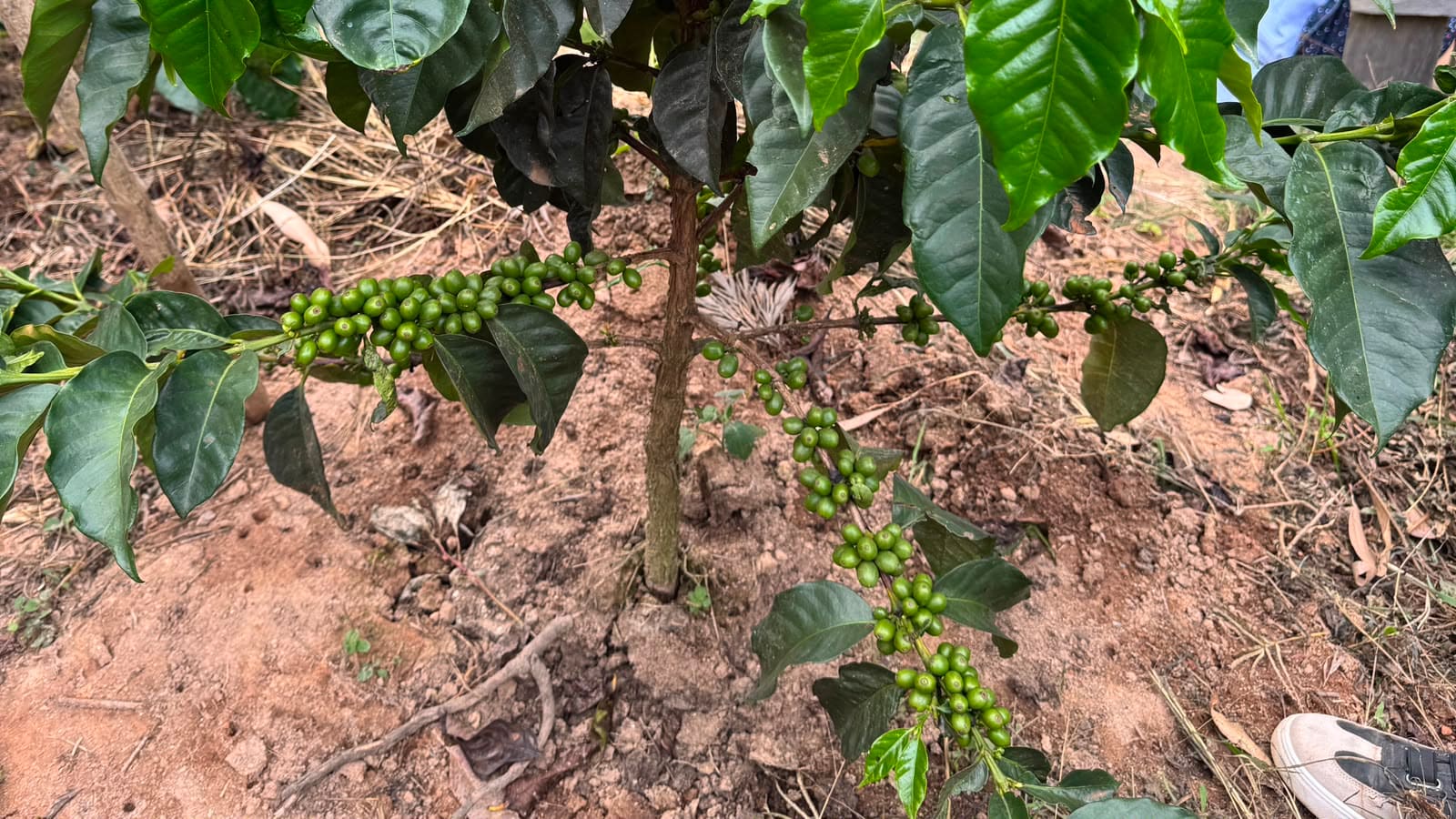
We have already planted over 1,600 coffee seedlings on the ground in Kikoko Village. Wet mill construction begins in early 2027. The mill will serve farmers in the immediate catchment in its first season, with capacity expanding as volumes and financing allow.
This MVP pilot is designed to test the core assumptions needed to scale our model. A full pilot brief is available upon request.
Request our pilot briefWill farmers adopt our processing and financing model given the right terms and proximity?
Does access to input financing translate to better farming outcomes in practice?
Does harvest-aligned, in-kind repayment work reliably at the farm level?
Do farmers clearly understand how their coffee is priced and what they receive?
Is there buyer interest in traceable, single-origin coffee from Makueni?
Can this model be replicated across similar coffee-growing communities?
We are building a proven, replicable blueprint to overcome the systemic barriers facing smallholder coffee communities. This pilot is the critical first step: a designed opportunity to generate the evidence, refine the methodology, and de-risk the path to scale.
We invite visionary grantmakers and impact investors to become foundational partners in this work. Your capital is not a donation; it is catalytic fuel to build a transferable model for impact.
We measure success by the actionable intelligence and scalable assets we generate for the field. As a partner, you receive a clear return on impact:
First access to finalized data on the pilot's impact on key metrics.
A detailed playbook covering community engagement protocols, training modules, cost structures, and impact measurement frameworks — enabling replication across similar contexts.
Funding is tied to clear milestones. You receive concise, quarterly updates focused on outcomes and learning.
Exclusive insight into the intersection of rural livelihoods, farmer finance, and supply-chain integrity, positioning your organization as a thought leader in agricultural development.
Our Story
Coffee has been grown in Kikoko Village, Makueni County since the 1980s. For most of that time, the farmers who grew it had no reliable way to process it, no access to seasonal credit, and no mechanism to connect what they produced to buyers who would pay what it was worth. That is not a story unique to Kikoko Village — it is the story of smallholder coffee farming across Kenya. The failure is not one of effort or quality. It is structural.
Limo Africa Group exists to address that structure directly. We build community wet mills paired with seasonal finance and the digital infrastructure to connect what farmers grow to the buyers who will pay the most for it. Farmers stay in control of their coffee. We earn our place in the chain by being useful, not by being unavoidable.
The pilot is in Kikoko Village. Construction begins in early 2027. We are pre-revenue, building deliberately, and raising the capital to do this properly.
Michael Sewe
Founder & CEO — Limo Africa Group, incorporated in Kenya in late 2024.
Contact
We are at the pre-revenue stage, raising the capital to begin construction of our first wet mill in Kikoko Village, Makueni County. We share an executive summary and financial model with serious enquiries.
We are raising seed capital to fund pilot infrastructure in Makueni County. If you are interested in impact-first agricultural finance in East Africa, please reach out.
We are not yet processing. We expect our first harvest season to follow construction in 2027. If you are a specialty buyer or green coffee trader looking to build direct relationships with verified-origin Kenyan lots, we would like to start that conversation now.
We are happy to speak with academics and development practitioners working on smallholder coffee, agricultural finance, or Kenya's coffee regulatory landscape.